
Pigs
From simple obstacles to farm animals, pigs define the porcine presence in gaming history.

Ryan Hodnett · CC BY-SA 4.0
Pigs are a recurring species of anthropomorphic and non-anthropomorphic animals found across numerous video game franchises, often serving as enemies or obstacles. In the Super Mario series, they are not a primary antagonist group and are unrelated to Goombas. No established enemies like 'Piggy' or 'King Boo's pig-like minions' exist in Nintendo's Super Mario canon.
- Species
- Porcine
- Primary Franchise
- Various (notably Super Mario series, but not a primary enemy)
- Common Role
- Enemy / Obstacle / Livestock
- Notable Variants
- None in Super Mario canon; Popple (Mario & Luigi: Superstar Saga) is a humanoid thief, not a pig king
- Affiliation
- Varies by title; not a core Bowser's Army member
- Status
- Active in-game entity in various franchises
Lore & Background
Beyond Nintendo, pigs have appeared in various other titles ranging from farming simulators like 'Stardew Valley' to open-world adventures. In these contexts, they often serve as livestock for resource gathering or as environmental hazards. Their design varies significantly depending on the game's tone, shifting from realistic agricultural animals in simulation games to stylized, sometimes hostile creatures in action-adventure titles.
In Their Own Story
The mud squelched beneath heavy hooves as the Pig King surveyed his domain from the throne of straw and stone. Below, his subjects grunted in unison, a rhythmic sound that echoed off the cavern walls. A shadow passed overhead—a bird? No, a camera drone from the outside world. The Pig King narrowed his eyes, knowing that the hero's arrival was imminent, bringing with it the chaos of coins and power-ups.
Reader's Guide
The depiction of pigs in video games has evolved alongside the industry itself. Early 8-bit titles featured simple pixelated sprites representing obstacles or collectibles, often lacking distinct personality. As graphics improved, developers like Nintendo began to integrate pigs more deeply into narrative structures, such as the pig-themed levels in 'Super Mario Bros. 3' or the specific kingdoms in RPG spin-offs. Interviews with creators often highlight the versatility of porcine designs; they can be cute farm animals or menacing monsters depending on the context. The soundtrack for these segments frequently utilizes rustic instrumentation or comedic brass to underscore their nature. Fan theories regarding hidden pig characters or secret areas have occasionally been validated by developers in later titles, cementing their place as a staple of gaming folklore. The influence of pigs extends to the farming simulation genre, where they are central mechanics for resource management and progression. This shift from enemy to asset demonstrates how game designers adapt real-world animals to fit diverse gameplay loops, ensuring their continued relevance across genres.
Did You Know?
- In 'Mario & Luigi: Superstar Saga', the character sometimes mistaken for a 'Pig King' is actually Popple, a humanoid thief—no pig king rules a kingdom there.
- Pigs are often used as environmental hazards in racing games, blocking tracks or causing collisions.
- The concept of pigs as enemies dates back to early arcade platformers where they represented simple jump obstacles.
- Some RPGs feature pig-based summons or companions that players can recruit during their journey.
Origins and Classification
The term feral pig specifically describes a domestic swine that has escaped captivity or been released into the wild to live independently, distinct from undomesticated Eurasian wild boars. While zoologists technically exclude introduced wild boars from this category because they were never truly domesticated, these two groups frequently interbreed in regions like North America and Australia, creating complex hybrids often called razorbacks or wild hogs. The history of their presence in the New World dates back to the 16th century when explorers like Christopher Columbus and Hernando de Soto intentionally released domestic pigs to serve as mobile food supplies for future expeditions. Over centuries, these animals established themselves across the Americas, with populations exploding from two million individuals covering twenty states in 1990 to six million spanning thirty-eight states by 2013. This rapid expansion includes new territories extending northward into states like Pennsylvania and New Hampshire, driven by their ability to adapt quickly to diverse environments.
Ecological Disruption and Damage
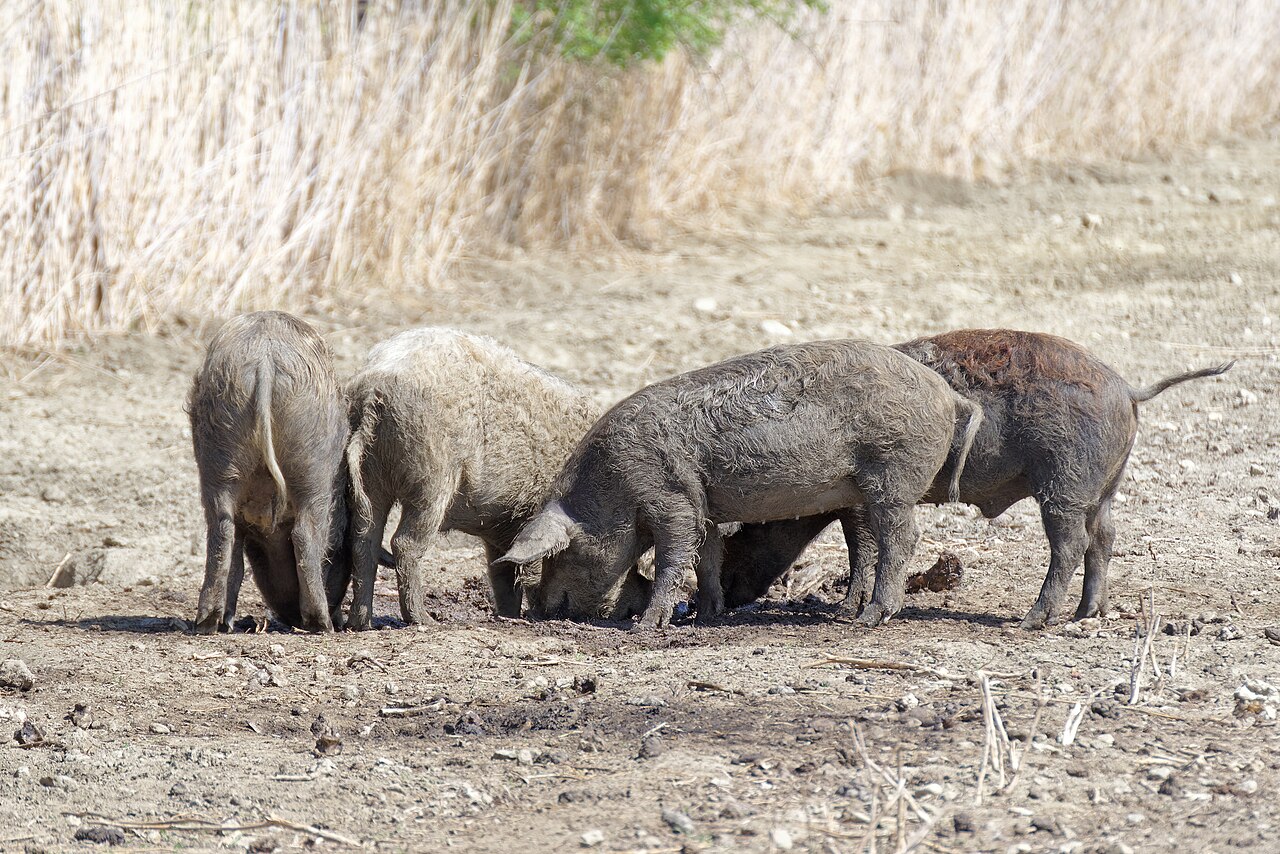
Introduced swine are widely recognized as one of the most hazardous and costly invasive species globally due to their high reproductive rates and extreme adaptability. Their primary method of foraging involves rooting through soil with snouts and tusks, a behavior that devastates native flora which has not evolved defenses against such destruction. This activity prevents plant regeneration, degrades habitats, and pollutes water sources through wallowing. The impact extends beyond vegetation; as opportunistic omnivores consuming mostly plants but also small vertebrates like turtle eggs and bird poults, they outcompete indigenous wildlife for resources. Studies indicate that forest fragments invaded by these pigs suffer a twenty-six percent reduction in vertebrate species richness. Furthermore, their aggressive competition threatens specific game animals such as deer and turkeys, while their sheer numbers allow them to damage acres of agricultural fields overnight, causing billions of dollars in property loss annually.
Disease Vectors and Agricultural Threats
Beyond physical destruction, feral pigs pose a severe biological threat by acting as reservoirs for numerous pathogens. They are confirmed potential hosts for at least thirty-four diseases capable of transmission to livestock, wildlife, and humans. Commercial pig farmers face significant anxiety regarding the return of swine fever, which has been extinct in America since 1978, as feral populations could reintroduce this devastating illness. Additionally, they harbor protozoans like Sarcocystis, creating immediate risks for non-biosecure domestic facilities. The lack of natural population control exacerbates these dangers; while native predators like coyotes or bobcats might occasionally target weakened piglets, they are generally too small to challenge a full-grown boar. Even larger potential predators such as cougars and bears face barriers due to their own declining numbers or slow reproductive rates, leaving feral pigs largely unchecked in many regions where they thrive.
Reproductive Strategies and Population Dynamics
The explosive growth of feral pig populations is largely driven by their remarkable reproductive efficiency and lack of effective natural predators. A female sow can reach sexual maturity as early as six months old and produce multiple litters annually, allowing her lineage to expand rapidly compared to other local wildlife. This high birth rate enables them to outcompete native species for critical resources like tree mast during autumn feeding seasons. In the absence of sufficient predation pressure from animals like wolves or jaguars, which are either extirpated or too scarce in many affected areas, these pigs dominate their ecosystems. Their ability to withstand environmental pressures and interbreed with introduced wild boars further solidifies their foothold. Consequently, they have become a common game animal in some regions while simultaneously becoming an ecological nightmare, filling vacant niches left by prehistoric species like peccaries but doing so with destructive consequences for modern biodiversity.
Gallery
Frequently Asked Questions
Who are the pigs in Inside?
They are genetically modified animals kept as test subjects within a secret government facility.
What role do they play during gameplay?
Players encounter them primarily as background elements or obstacles that reveal the sinister nature of the setting.
How does their story conclude in the game?
In the final sequence, the pigs break free and appear to have gained sentience or control over the facility's inhabitants.
Why are they significant to the game's themes?
Their transformation underscores the narrative warnings about dehumanization and loss of individuality under control.
Do they interact with the protagonist?
The boy rarely interacts directly, but their presence drives the environmental storytelling throughout his journey.
More in Production & Legacy
Elsewhere in the Inside universe
Spotted an error? Know more?
This is a living reference — every entry is fact-audited, and reader corrections feed straight into our audit queue. Suggest an edit · See this site's audit record